
Diversity - 4
Palestine/Israel

I worked at Purdue University for 41 years doing entomological science. Thirty-five of those years were spent in my office, laboratories, and halls of Whistler Hall, Purdue College of Agriculture, West Lafayette, Indiana. During those years I met, worked with, talked to, and laughed with others who did science and service there, people from all over the world. They made my life immensely richer. They taught me that there are ways of looking at the world I could never have imagined. They changed me for the better. I am grateful. Following are the stories of some of them. Lucky me.
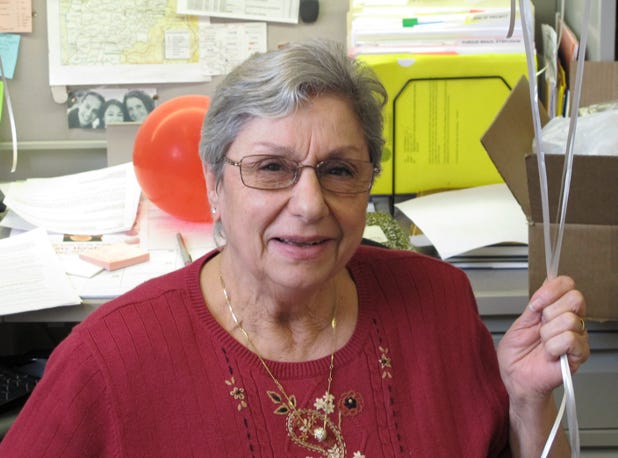
Katy Ghawi Ibrahim
Memories handed down from generation to generation often get lost, especially when one of your parents is an orphan, as was Katy’s dad. Despite this blank space in her family history, Katy knows that an ancestress came from Greece generations ago. She found her way to Lebanon and then to Jaffa, in Palestine. Katy herself, a Palestinian Arab girl with Grecian roots, was born in Jerusalem, the daughter of a father who managed the YMCA. Surrounded by Muslims, she grew up a Protestant Christian in a land that was becoming increasingly Jewish. Her first language was Arabic, but at school, she spoke French. In the eighth grade, she transferred to Jaffa. Hebrew taught there wasn’t hard for Katy, a natural linguist, but the new school itself was hard, and classes were rife with strife because of differing political and religious views, Greeks, Armenians, Jews, and Arabs. Katy, strong-willed, didn’t back away from disputes, and so it was an unhappy time. Her parents helped her move to St. Joseph’s, a Catholic high school, a satellite of a school in France; and so Katy, growing up in 1950’s Israel, was educated in French. Then, by luck, taken under the wing of a generous American couple, the Millers, she came to America, to Philadelphia, mastering English, and earning her B.A. at Lawrence University. Cultural shocks she learned, too. In her Arab culture, if you esteem someone highly, you offer something personal and valuable as a gift. Such gifts are always gratefully refused. Everybody knows that. But when Katy offered her American roommate a heavy gold ring, it was accepted with delighted thanks! The girl put the gleaming ring on her finger and, stretching out her arm and bending her hand in the air, admired it, beaming! Shock! Returning to Jerusalem, Katy landed a dead-end job, the kind with barriers minorities everywhere know. Dissatisfied, she returned to America, where there was opportunity galore. That included finding her future husband, electrical engineer Shawki Ibrahim, himself a Lebanese orphan, and then kids, and settling in West Lafayette and a job at Purdue with “Wild Bill” Morris, ag economist and internationalist. Thus slipped Katy into dual careers, one helping administer international programs in agriculture – for which she received a salary – the other as a volunteer big sister (mother substitute, guide, counselor, friend, confidant, troubleshooter, and institutional memory) for countless international students, professors, and visitors. With friends everywhere, she most particularly cares for Africans, for whom she has a space in her heart as big as the sky. The very biggest place in her heart today, though, and the warmest, too, is for her new twin granddaughters, Annabel and Zoe, who, one might say, are the very A to Z of Katy’s delight.